Taiwan’s Ministry of Labor (MOL) has confirmed that the country’s minimum wage will rise once again in 2026 — marking the tenth consecutive year of adjustment.
The move underscores Taiwan’s ongoing effort to enhance workers’ welfare while maintaining economic growth and competitiveness.
Taiwan’s Minimum Wage Growth: 2016–2026
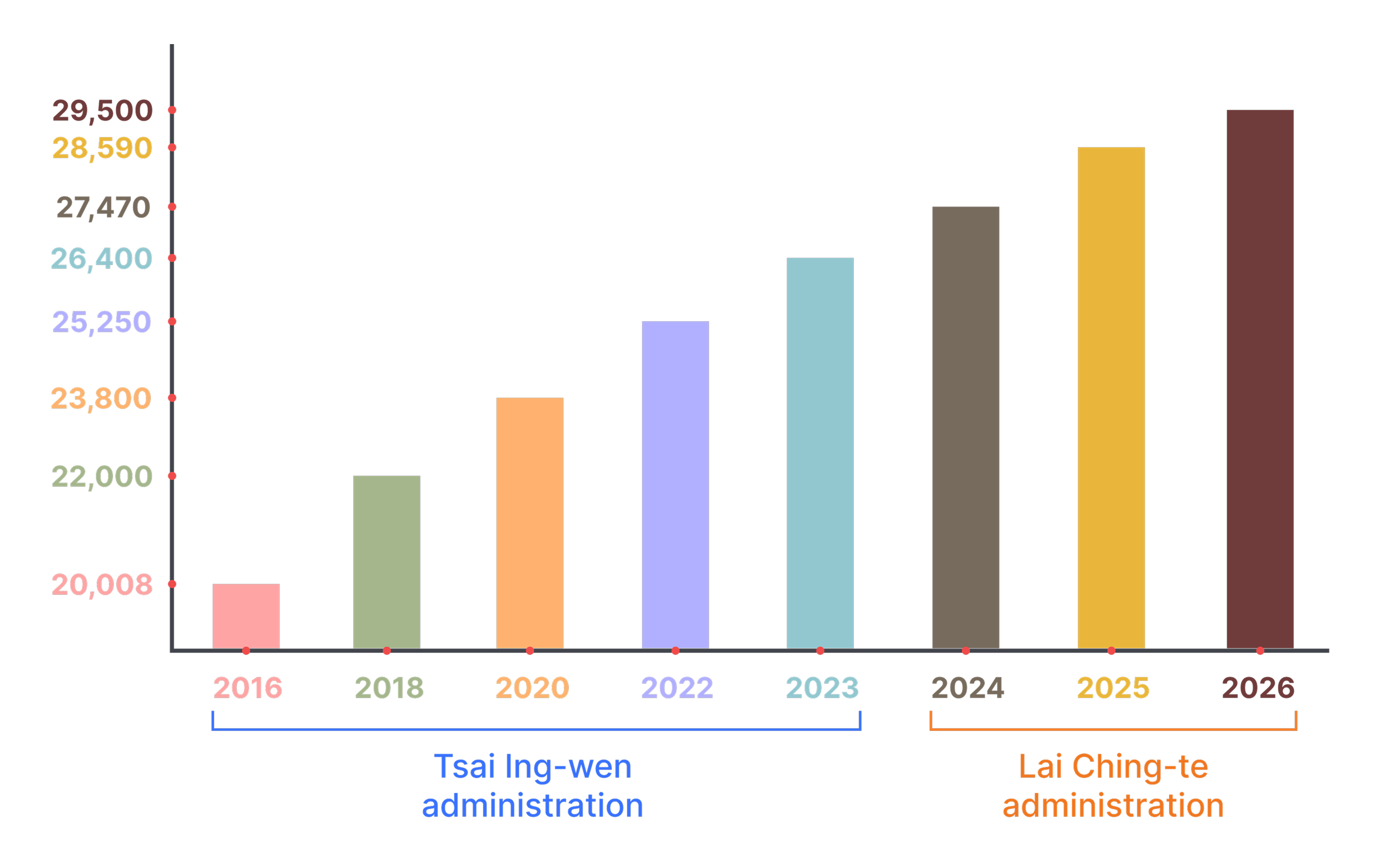
Taiwan’s minimum wage has steadily increased for 10 consecutive years, reflecting the government’s consistent policy of supporting income growth.
Starting January 1, 2026, the monthly minimum wage will increase by 3.2 percent to NT$29,500 (about US$967), while the hourly rate will rise from NT$190 to NT$196.
This latest increase follows a review by the Minimum Wage Deliberation Committee, which considered inflation trends and the nation’s economic outlook.
2025 vs 2026 Minimum Wage Comparison
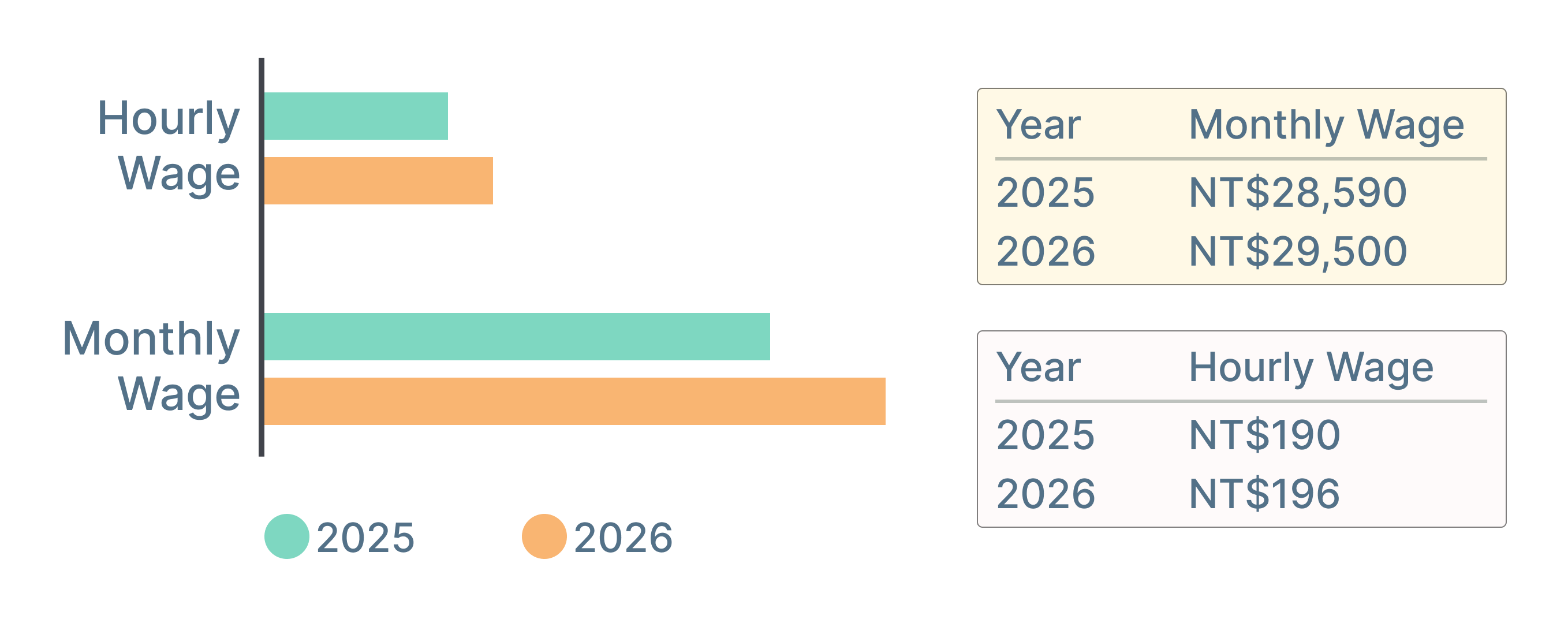
Both monthly and hourly minimum wages will rise by 3.2 percent starting January 1, 2026 — the 10th straight increase since 2016.
According to the Ministry of Labor, the decision was based on a balance between economic stability and workers’ purchasing power.
The Directorate General of Budget, Accounting and Statistics (DGBAS) recently raised its 2025 GDP growth forecast to 4.45 percent, citing stronger exports, while predicting a 1.76 percent rise in the Consumer Price Index (CPI).
However, labor unions had called for a larger increase — around 4 percent — proposing a minimum monthly wage of NT$29,734 and an hourly wage of NT$198.
They argued that this adjustment would better reflect higher living costs and ensure that workers benefit more directly from economic expansion.
Economic Indicators Behind the Wage Adjustment
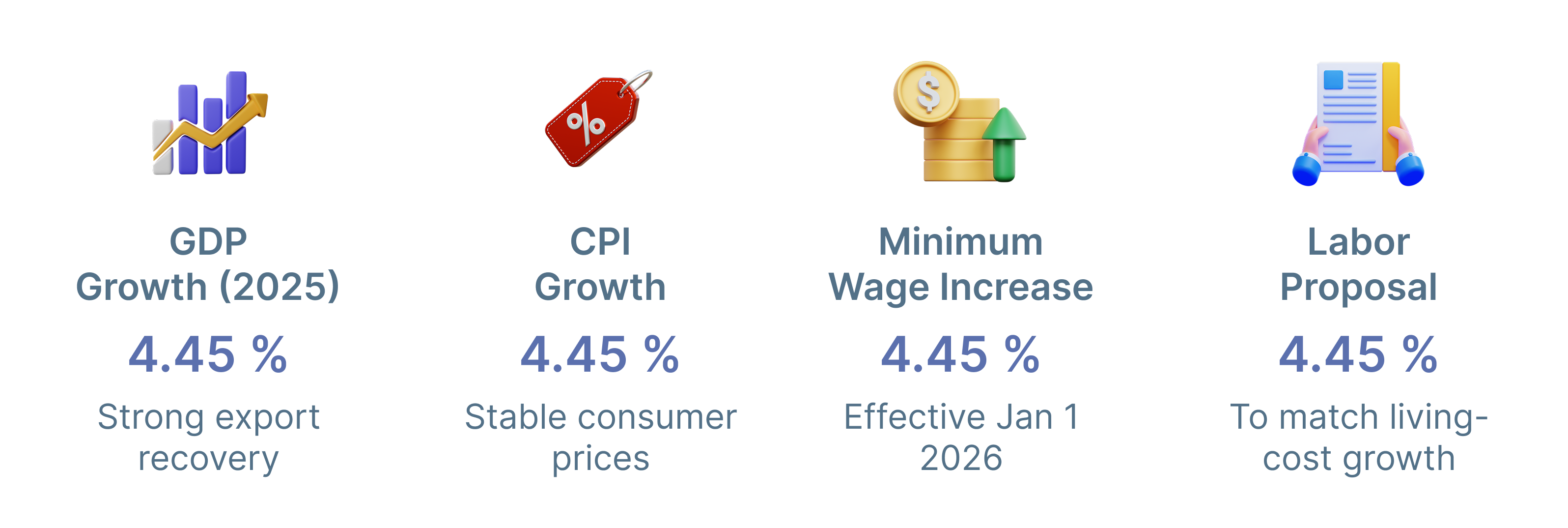
Economic growth, moderate inflation, and strong export performance were key factors in the 2026 wage adjustment.
Before the committee’s decision, some labor groups had voiced concern that the United States’ 20% tariff on select Taiwanese exports might influence the government to keep the increase modest.
Still, the approved raise shows continued progress — and balance — between worker welfare and economic resilience.
The 2026 adjustment marks the second under President Lai Ching-te’s administration, following eight under former President Tsai Ing-wen.
Together, they represent a decade of consistent wage growth that mirrors Taiwan’s evolution into a stable, innovation-driven economy.
Conclusion
Taiwan’s approach to minimum wage reform highlights its broader vision for sustainable growth and fair income distribution.
While labor groups continue to push for faster increases, the steady upward trend demonstrates the government’s commitment to long-term wage improvement.
As Taiwan moves into another year of economic expansion, the 2026 adjustment reaffirms its position as one of Asia’s most proactive economies in protecting worker income and ensuring inclusive prosperity.

Easy to start,
intuitive to use