
After deciding your industry, the next step is often underestimated:
Choosing the right city.
In practice, this decision affects more than just cost. It influences hiring, logistics, and how smoothly your business runs day to day.
We’ve seen cases where the same business model works well in one city, but struggles in another.
Vietnam Is Not One Single Market
From a business perspective, Vietnam operates more like three distinct zones:
- The North focuses on production and supply chains
- The South is more commercially driven
- The Central region is developing, with lower operating costs
This is why location should follow your business model, not the other way around.
Matching Industry with Location
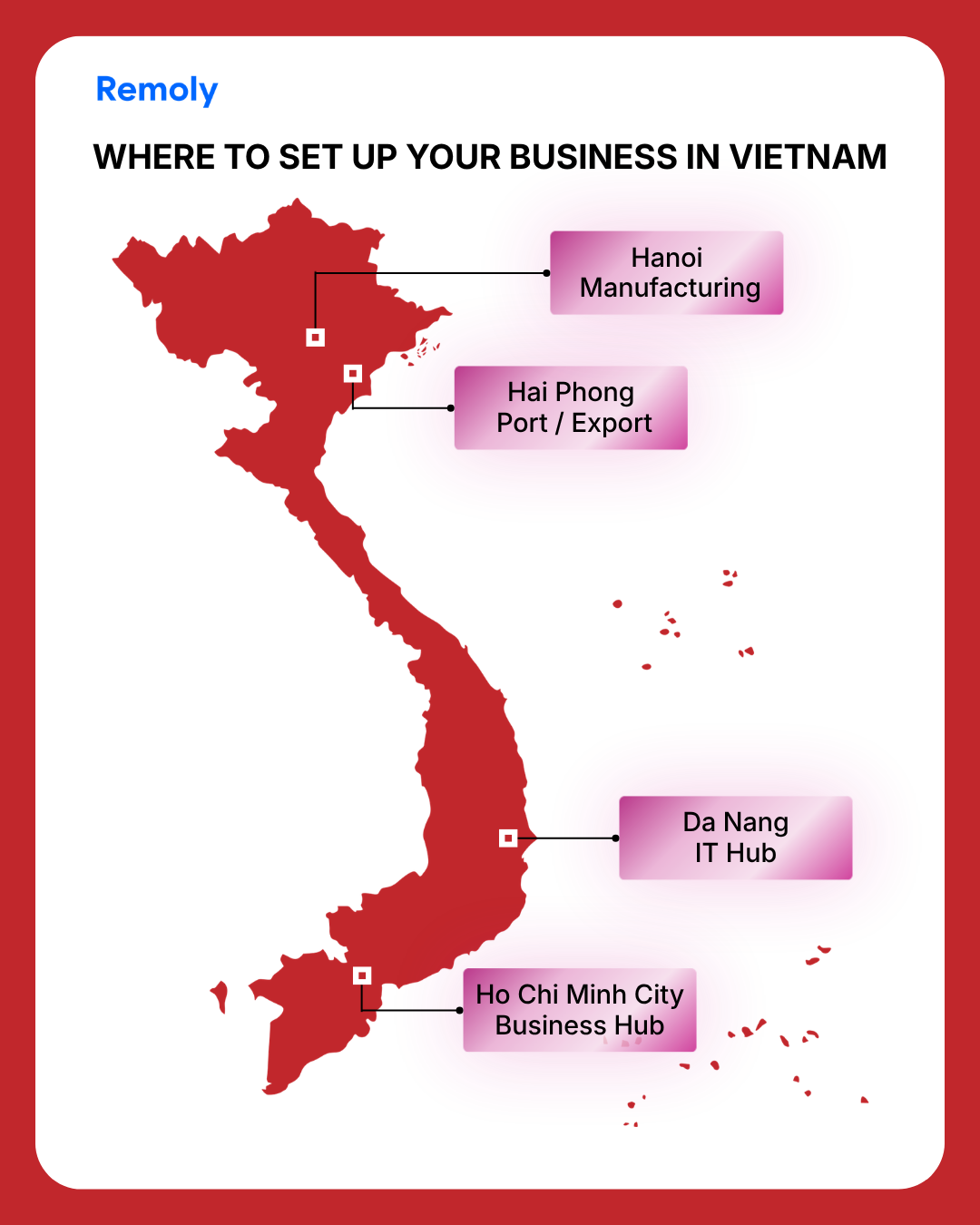
Below is a simplified view based on common setup patterns we see in practice.
How to Read This
This is not a fixed rule, but a practical reference.
A few points to keep in mind:
- Lower cost locations may increase operational complexity
- Being close to suppliers or customers often matters more than rent
- Talent availability varies significantly by city
In most cases, efficiency matters more than saving cost on paper.
What We Commonly See in Practice
Based on typical foreign investment setups:
- Manufacturing businesses often choose northern provinces such as Hanoi and nearby industrial areas, mainly for supply chain access
- Trading companies are frequently based in Ho Chi Minh City, where commercial activity and logistics are more developed
- IT and tech businesses are increasingly considering Da Nang for its growing talent pool and lower costs
- Customer-facing services tend to stay in major cities, where demand is more stable
These are not strict rules, but they reflect how most companies structure their setup.
Common Mistakes to Avoid
We often see a few recurring issues:
- Choosing a city based only on cost
- Ignoring logistics and supply chain distance
- Following other companies without considering their business model
These decisions usually lead to adjustments later, which can be more costly.
A Simple Way to Think About It
Instead of asking “Which city is best?”, it’s more useful to ask:
“Where will this business run most efficiently?”
That answer is usually clearer when you look at:
- Where your suppliers are
- Where your customers are
- Where you can hire the right people
Final Note
Choosing the right location does not need to be complicated, but it should be deliberate.
If you are planning to set up in Vietnam and want a clearer direction based on your specific situation, it helps to evaluate both industry and location together.

Easy to start,
intuitive to use