Opening a restaurant may look simple at first.
Find a location, prepare the menu, complete registration, and start operating.
But once the preparation process begins, many businesses realise the real challenge often starts before opening day.
Especially for foreign businesses entering Vietnam, the process can be more complex than expected.
The Challenge Is Not Just About Licenses
Many businesses think opening a restaurant only requires company registration and a few approvals.
In reality, the process usually involves several things happening at the same time.
Depending on the business, this may include:
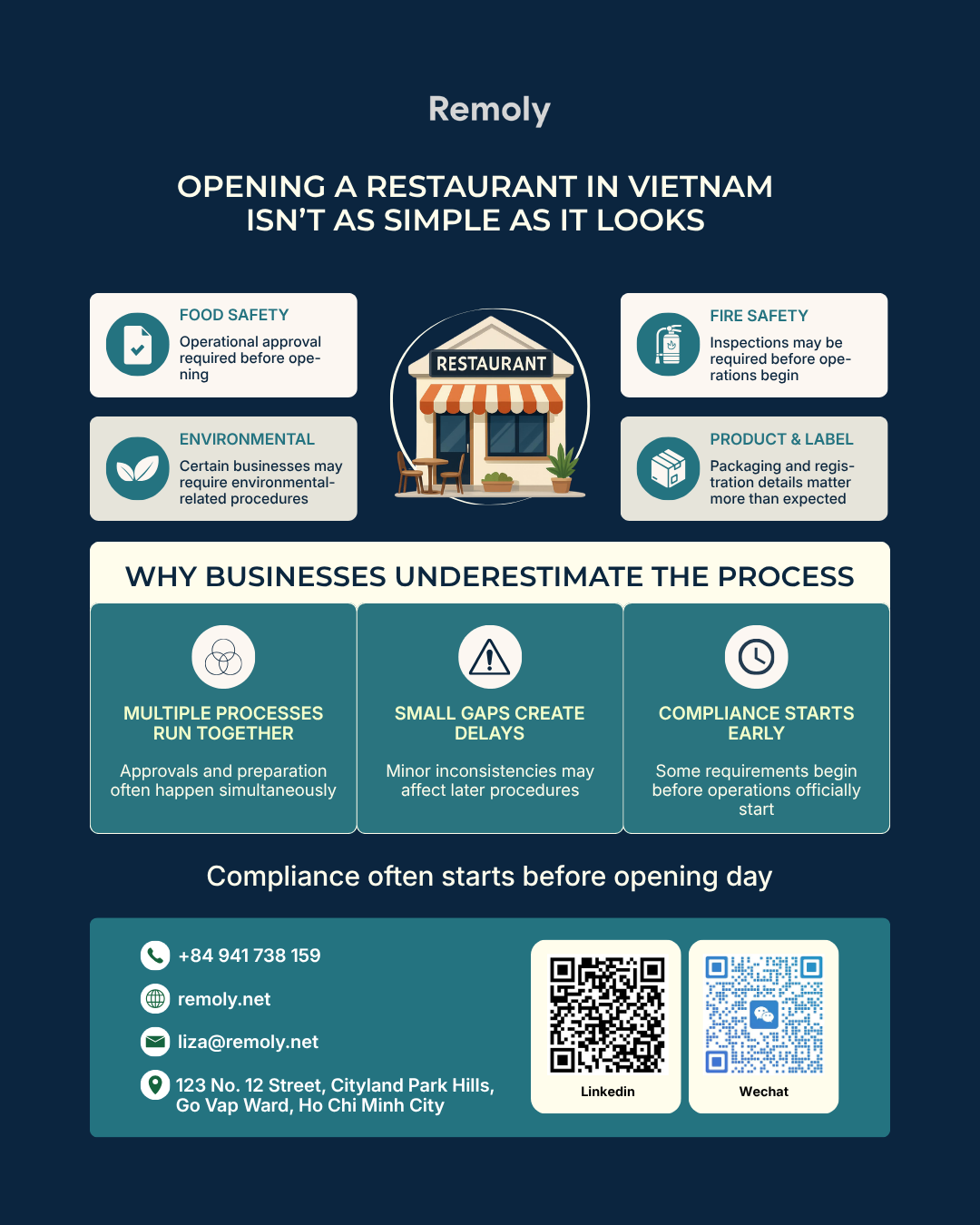
- food safety requirements
- fire safety checks
- environmental-related procedures
- packaging or labelling requirements
- operational documents and registrations
The difficult part is often not one approval alone.
The bigger challenge is managing multiple processes together within the same timeline.
For example, while preparing renovations, businesses may already need to consider kitchen layouts, fire safety requirements, and future inspections at the same time.
This is why many businesses underestimate how much coordination is actually needed behind the scenes.
Small Details Can Create Bigger Delays
From the outside, the F&B industry may seem easy to enter.
But in practice, delays are often caused by smaller details that businesses initially overlook.
For example:
- inconsistent information between documents
- incomplete operational records
- missing packaging or label details
- delayed updates or submissions
At first, these may seem minor.
But once inspections and approvals begin, small issues can gradually affect the overall timeline.
Many businesses only realise this when opening day is already getting close.
Compliance Often Starts Earlier Than Expected
Another thing many businesses overlook is timing.
In the F&B industry, some requirements may already apply before operations officially begin.
For example:
- kitchen and exhaust layouts may need to follow inspection requirements early on
- certain food products may involve packaging or labelling requirements
- some documents may need to be prepared before opening day
Because of this, many businesses discover that preparation takes longer than expected.
Why This Matters in Vietnam
Vietnam’s F&B market continues to grow quickly, especially in major cities such as Ho Chi Minh City and Hanoi.
As the market grows, operational and compliance requirements are also becoming more structured.
For foreign businesses unfamiliar with local procedures, early preparation can help reduce delays and avoid unnecessary adjustments later.
What Businesses Usually Prepare Early
Before opening, many businesses usually prepare by:
- reviewing which requirements apply to their business
- preparing documents early
- allowing enough preparation time
- checking which details may affect approvals later
- seeking local guidance when necessary
In many cases, better preparation early on helps operations run more smoothly later.
Opening a restaurant is not only about branding or daily operations.
Behind the scenes, many operational and compliance processes may already begin long before opening day.
The earlier businesses understand this, the easier the process usually becomes.

Easy to start,
intuitive to use