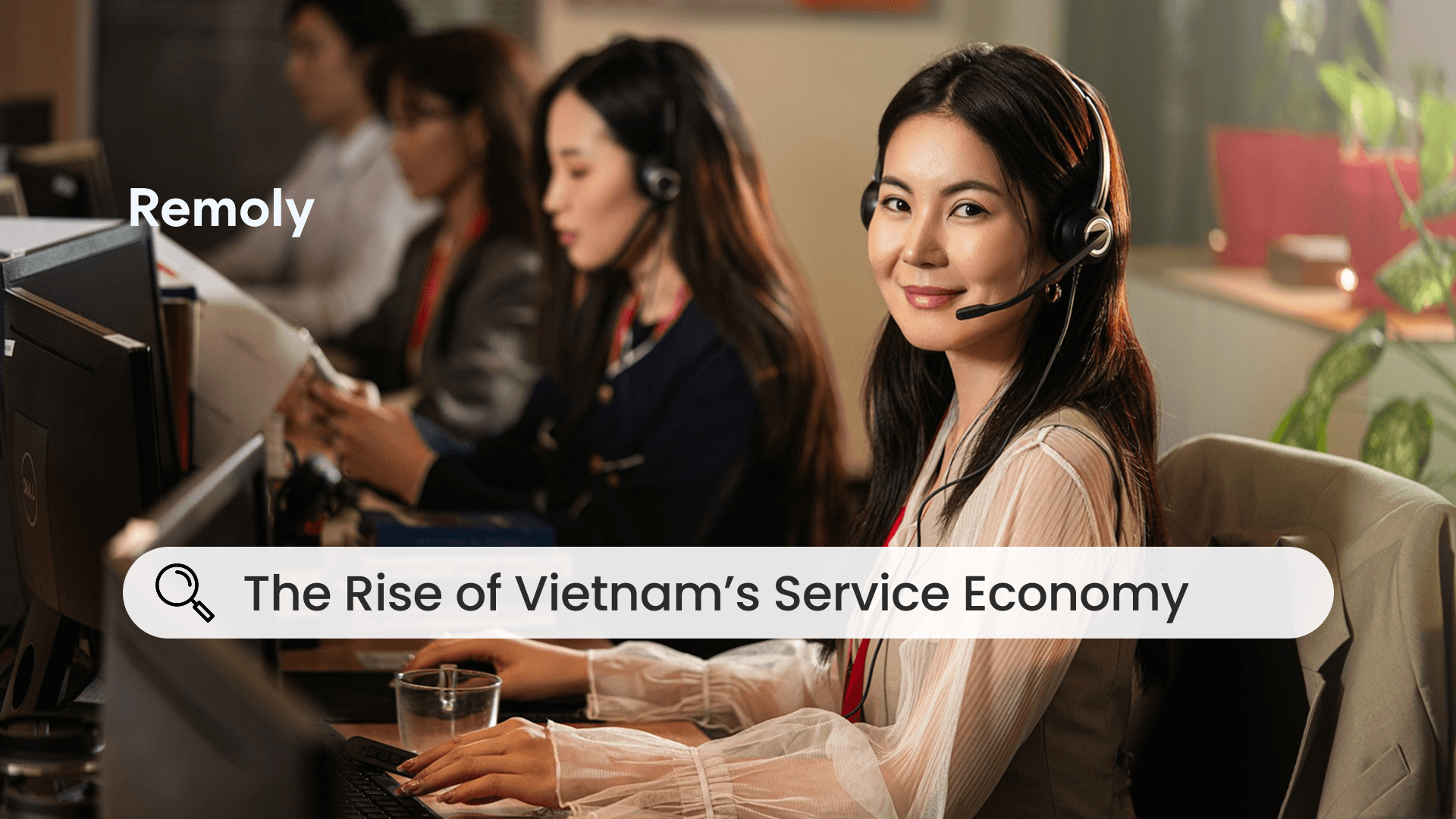
When people think about Vietnam’s economy, manufacturing usually comes first.
Factories, exports, and industrial growth have shaped the country’s global image for years. But another sector has been growing rapidly in the background: services.
Today, more foreign businesses are entering Vietnam not only to manufacture products, but also to:
- build regional teams,
- support operations,
- manage clients,
- coordinate supply chains,
- and expand service-based businesses across Southeast Asia.
From consulting and recruitment to IT outsourcing and digital services, Vietnam’s service economy is becoming increasingly difficult to ignore.
Vietnam Is Becoming More Than a Manufacturing Destination
Over the past decade, Vietnam has evolved beyond being simply a low-cost production base.
Cities like Ho Chi Minh City and Hanoi are seeing rapid growth in:
- international business activity,
- startup ecosystems,
- office development,
- digital infrastructure,
- and foreign professional communities.
As a result, many international companies are now viewing Vietnam as a place to operate business functions, not just manufacture goods.
Why the Service Sector Is Growing
Several factors are driving this shift.
Young and Adaptable Workforce
Vietnam has one of the youngest workforces in Southeast Asia. Many professionals are digitally familiar, adaptable, and increasingly experienced in international working environments.
Competitive Operational Costs
Compared to several regional business hubs, Vietnam still offers relatively efficient operational costs for service-based businesses and growing teams.
Rapid Digital Adoption
The growth of digital payments, cloud systems, e-commerce, and remote collaboration has created strong demand for:
- consulting,
- digital marketing,
- recruitment,
- customer support,
- and outsourcing services.
Service Industries Seeing Strong Growth
Some of the fastest-growing service sectors in Vietnam include:
- IT outsourcing,
- recruitment and HR support,
- consulting services,
- digital marketing,
- finance support,
- logistics coordination,
- customer service operations,
- and shared service centers.
Many foreign businesses are also building smaller operational teams in Vietnam before expanding further across the region.
What Foreign Businesses Often Underestimate
While Vietnam offers strong opportunities, there are also practical details that many companies only fully understand after entering the market.
Administrative Maintenance Still Matters
Many businesses focus heavily on initial setup, but ongoing administrative tasks can also take time:
- renewals,
- reporting,
- payroll coordination,
- document updates,
- and local compliance routines.
Some Processes Still Require Physical Documents
Despite rapid modernization, certain procedures may still involve physical paperwork, notarization, or in-person coordination.
For companies used to fully digital systems, this can occasionally slow things down.
Office Location Can Affect Flexibility
In some situations, office addresses and setup choices can influence future operational flexibility more than foreign businesses initially expect.
Timing Can Impact Operations
Holiday periods, hiring cycles, and administrative timelines can affect operational speed throughout the year.
Why Many Foreign Companies Start Lean
Interestingly, many foreign service businesses are no longer rushing into large-scale expansion immediately.
Instead, some prefer to:
- build smaller teams first,
- test operations gradually,
- support regional functions,
- and expand step-by-step.
This approach often gives businesses more flexibility while reducing unnecessary operational pressure early on.
Vietnam’s Growth Story Is Expanding
Manufacturing will remain an important part of Vietnam’s economy.
But alongside that growth, the country’s service sector is also becoming increasingly important.
For many foreign businesses, Vietnam is no longer just a place to manufacture products.
It is increasingly becoming a place to build teams, support regional operations, and create long-term business presence in Southeast Asia.

Easy to start,
intuitive to use